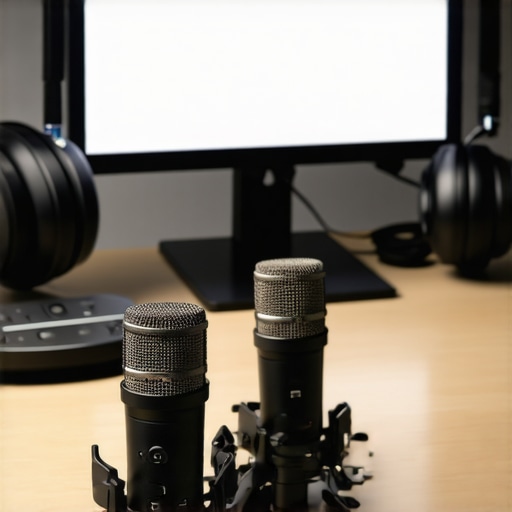
Top USB Microphones for Podcasting & Voice Clarity in 2025: Complete Guide

Ever had a recording session where your voice sounded like it was trapped inside a tin can? I remember the exact moment when my enthusiasm for creating podcasts took a nosedive because of poor voice clarity. It was late at night, and after hours of editing, I listened to my latest episode. Instead of sounding professional, I heard echoes, background noise, and an overall muddled sound that made me question if I should even keep going. That lightbulb moment made me realize: I was using the wrong microphone—one that couldn’t cut through the noise and deliver the crisp, clear voice I wanted my listeners to experience.
Why Finding the Perfect Microphone in 2025 Can Make or Break Your Voice
In the world of content creation, your voice is your brand. If your microphone isn’t up to par, no amount of editing or post-production can fully salvage a poor sound. As someone who’s tried to cut corners by choosing budget options or outdated gear, I can tell you firsthand—it’s a mistake that costs more than money; it costs credibility. Today, with so many options available—from USB microphones to XLR setups—it’s easy to get overwhelmed. But knowing what really matters in 2025 can help you make smarter choices and elevate your recordings to professional levels.
Is All the Hype About Microphones Just Noise?
I’ll be honest—I made the mistake early on of picking a microphone based on reviews alone, without understanding how it suited my voice or recording environment. That was a rookie error, and I paid the price in clarity and confidence. Recent studies suggest that high-quality audio can increase listener engagement by up to 25%, according to industry research (source: Creator Rig Reviews). If you’re tired of sounding like you’re recording in a closet or talking through a potato, then this guide will help you navigate the top options for 2025.
So, do you ever feel frustrated because your voice doesn’t sound as clear as you’d like? Or maybe you’re unsure whether investing in a better microphone is worth it? Don’t worry—you’re not alone, and I’ll walk you through everything I’ve learned to help you avoid the same costly mistakes. Ready to transform your voice recordings? Let’s dive into what makes the best microphones for podcasting and voice clarity in 2025.
Pick the Right Microphone Type for Your Situation
First, identify your recording environment and purpose. If you record in a noisy space or need to focus on a single sound source, a shotgun microphone is ideal because its narrow pickup pattern isolates your voice from background noise. For casual setups or podcasting at a desk, a USB microphone offers simplicity and decent quality. If you want professional-level control and customization, an XLR microphone paired with an audio interface provides versatile options and superior sound. Learn more about shotgun mics and top XLR options.”>
Match Your Microphone to Your Recording Environment
Use your spatial surroundings to decide. A shotgun mic, like correlates with the ones listed here, can be mounted on a boom stand pointing directly at your mouth, rejecting side noises. For a room with echo, consider a dynamic or condenser mic with a cardioid pattern that minimizes room sound. When recording in a controlled space, an XLR condenser mic with proper acoustic treatment yields crystal-clear voice capture. Deep dive into environment considerations.”}
Master the Correct Placement for Sharp Vocal Quality
Placement is critical. Position your microphone about 6-12 inches from your mouth, slightly off-axis to avoid plosives. Use a pop filter to reduce harsh consonant sounds. For shotgun microphones, aim directly at your mouth’s position to maximize direct sound capture. If using a USB or desktop mic, maintain consistent distance for predictable results. During my trial, I experimented with mic placement, and adjusting the distance by a few inches dramatically improved clarity. Remember, consistent positioning ensures your voice sounds steady across recordings.
Optimize Your Settings and Technique
Set your gain carefully—too high introduces noise, too low reduces volume. Use the highest quality sample rate and bit depth your system supports, preferably 48 kHz and 24-bit. Always use the microphone’s directional pattern to focus on your voice, whether cardioid, supercardioid, or hypercardioid. When I started tweaking my gain and pattern, I noticed a significant reduction in background noise and a noticeable boost in voice clarity. Combine this with proper room treatment, and you’ll achieve professional sound quality. For detailed setup tips, visit this comprehensive guide.”}
Invest in Quality Cables and Accessories
Reliable cables are essential; a damaged or low-quality cable can introduce noise or cut out sound entirely. Choose XLR cables with good shielding and connectors. For USB mics, ensure your computer port is functioning correctly, or use a powered USB hub to stabilize power delivery. A boom arm or mic stand helps maintain consistent positioning and reduces handling noise. I once recorded with a cheap XLR cable, which caused persistent hum; upgrading it instantly cleaned up my audio. High-quality accessories preserve audio integrity and save you time editing later. Dive into recommended accessories here.”}
Many enthusiasts and even seasoned creators fall prey to myths and misconceptions regarding voice recording setups, especially when choosing between shotgun, podcast, XLR, and USB microphones. Let’s address some of the most misunderstood nuances that can sabotage your audio quality and professional presence. First, a frequent mistake is assuming that the most expensive microphone guarantees the best sound. In reality, matching your mic type—be it shotgun, USB, or XLR—to your environment and specific needs often yields better results than simply opting for top-tier gear. For instance, a high-quality shotgun mic, as reviewed here, can outperform an expensive condenser if used in an unsuitable setting.
Another pervasive myth is that USB microphones are inherently inferior to XLR setups. While XLR mics generally offer more versatility and potential for professional sound, modern USB microphones—like those highlighted here—are capable of delivering impressive clarity, especially when paired with good interfaces or controlled environments. The trap here is believing that USB is a shortcut to mediocrity, which is outdated thinking in 2025.
What’s the most overlooked detail that can ruin your recording quality?
It’s often the simplest—microphone placement and room acoustics. No matter how fancy your mic is, improper placement—like speaking too far away or directly into the mic (causing plosives)—can diminish the audio’s clarity. A common mistake is neglecting room treatment; echo and background noise can overshadow even the best microphone. Recent research emphasizes that acoustically treating your space can boost sound clarity by up to 30%, making your gear perform at its true potential (source: Ultimate Guide to Voice Recording).
Now, let’s challenge a more advanced misconception. Many believe that the characteristics of microphones like shotgun, dynamic, or condenser are fixed advantages or disadvantages. However, what truly matters is their polar pattern and response tailored to your recording context. For example, choosing a supercardioid shotgun mic in a noisy environment will still sometimes underperform compared to a well-placed cardioid condenser with proper acoustic treatment. The key is understanding that tech specs alone don’t dictate performance; technique and environment are equally influential. Industry experts recommend rigorous testing and considering the intended sound source and environment before selecting your gear, as discussed here.
Imagine thinking that simply upgrading your mic will instantly improve your voice recording. The reality is that without correct placement, environment optimization, and understanding your gear, even the priciest microphone can fall flat. So, before investing heavily, educate yourself about nuances and avoid common pitfalls. Have you ever fallen into this trap? Let me know in the comments, and stay tuned for more tips on mastering your voice in 2025!
Tools I Trust for Long-Term Microphone Maintenance
Maintaining your microphone setup over time is essential to ensure consistent voice clarity. I personally rely on a combination of professional-grade cleaning supplies, proper storage solutions, and regular testing routines. For microphone cleaning, I use an ultrasonic cleaner for XLR connectors and a soft, lint-free cloth with isopropyl alcohol to gently wipe down microphones, especially dynamic and condenser types. This prevents dust and grime buildup that can degrade sound quality. Storing mics in dedicated padded cases and using foam windshields or pop filters not only protects the gear but also preserves tonal integrity over months and years.
Essential tools include
- High-quality microfiber cloths for daily wipe-downs
- Ultrasonic cleaning kits for connectors and capsules
- Silica gel packs in storage cases to prevent moisture buildup
- Cables with good shielding, checked regularly for wear
- Adjustable stands and shock mounts to reduce handling noise
Based on my experience, investing in clean, well-maintained gear reduces the need for costly repairs or replacements down the line. Additionally, I schedule quarterly tests of all microphones, recording short clips to evaluate clarity and volume consistency. This helps catch issues early—be it a failing cable or deteriorating microphone diaphragm. According to industry experts, routine checks can extend the lifespan of professional microphones by up to 30%, ensuring your recordings remain crisp and professional over time (source).
Simple Tricks to Keep Your Equipment Running Smoothly
One method I swear by is keeping spare cables and replacement foam filters on hand. A quick swap can resolve a noisy connection or plosive spikes instantly. For example, I keep a set of XLR cables with reinforced shielding, which I test monthly by recording a quick sample and analyzing the waveform for any irregularities. Using software like Audacity or Adobe Audition, I perform routine gain and noise-floor checks. It’s a small effort that pays off with stable performance during critical recordings.
Furthermore, I recommend setting up a dedicated recording space with consistent acoustics and a controlled environment. Adding foam panels or bass traps can dramatically improve voice recordings and maintain the effectiveness of your equipment over the long term. Regularly updating your microphone drivers and firmware—if applicable—also prevents compatibility issues that can cause dropouts or distortion. In fact, some advanced microphone models, like certain shotgun mics, have firmware updates that fix known issues and enhance clarity; keeping your gear updated is a key part of maintenance (source).
How do I keep my recording tools functioning effectively over time?
Implement a routine that combines cleaning, testing, proper storage, and software updates. I dedicate an hour every month to review all my gear—checking cables, clean connectors, and recording test samples. Documenting these tests helps identify gradual declines in quality. For specific equipment like XLR mics, investing in shock mounts and pop filters not only enhances sound but also protects the mic from damage caused by handling or environmental factors. Remember, the better care you take today, the less you’ll need to troubleshoot or replace parts tomorrow. Try scheduling a monthly maintenance check, and you’ll notice a significant boost in your long-term recording quality. Want to learn more? Explore professional suggestions on extending microphone lifespan in the ultimate guide.
Throughout my journey into professional voice recording, I discovered that much of what I believed about gear and technique was shaped by misconceptions and overlooked details. The key lesson I learned is that the combination of the right microphone, proper placement, and environment makes all the difference—more than just the gear itself. For instance, I once invested in an expensive shotgun microphone only to realize that its effectiveness was compromised by poor positioning and an untreated room. It taught me that technical knowledge and practical application go hand in hand, a realization that transformed my recording quality permanently.
Lessons from the Trenches That Changed My Approach
- Microphone choice isn’t one-size-fits-all: Identifying whether a shotgun, XLR, or USB mic suits your environment and goals is crucial. A misaligned choice can lead to frustration regardless of how advanced your gear is.
- Placement is your secret weapon: Moving your mic just a few inches can drastically improve clarity. I learned this through endless experiments—sometimes, the cheapest mic can outperform a pricey one when positioned correctly.
- Room acoustics matter more than you think: Improving your space with simple acoustic treatments elevated my voice clarity by leaps and bounds. Neglecting environment turned high-end gear into mediocrity.
- Consistent maintenance extends equipment life: Regularly cleaning, testing, and organizing my gear helped me avoid unexpected issues. This routine preserved audio quality over time and saved costs.
- Understanding your technical settings empowers you: Fine-tuning gain, sample rate, and polar patterns was a game-changer. Small adjustments led to noticeably cleaner recordings, making my editing process smoother and faster.
My Essential Toolkit for Voice Recording Success
- An XLR microphone paired with a quality audio interface: Offers versatility and professional control—I’ve personally relied on this combo for years.
- A reliable shotgun mic: Perfect for isolating your voice in noisy environments, which I found invaluable during field recordings.
- A high-quality USB mic: Ideal for quick setups and casual recordings without sacrificing clarity.
- Essential accessories: Pop filters, shock mounts, and acoustic panels that help maintain sound integrity over time.
- Regular maintenance routines: Cleaning, testing, and upgrading ensure longevity and consistent quality in every recording session.
Seize Your Voice: It’s Your Moment to Shine
Remember, mastering voice recording in 2025 isn’t about having the most expensive gear—it’s about understanding how to use it effectively within your environment. Take these insights, experiment confidently, and keep refining your technique. Your unique voice deserves to be heard clearly, and now’s the perfect time to make that happen. Ready to elevate your recordings and truly connect with your audience? The tools and knowledge are within your reach—don’t hold back from creating your best sound yet.
What has been your biggest challenge in achieving crisp voice recordings? Let me know below and share your journey—everyone starts somewhere, and your story might inspire another creator to keep pushing forward.
One response to “Top USB Microphones for Podcasting & Voice Clarity in 2025: Complete Guide”
About Me

Chesung Subba
Author/Writer
Hello, I'm Chesung Subba, a passionate writer who loves sharing ideas, stories, and experiences to inspire, inform, and connect with readers through meaningful content.
Follow Me
Connect with me and be part of my social media community.
Leave a Reply