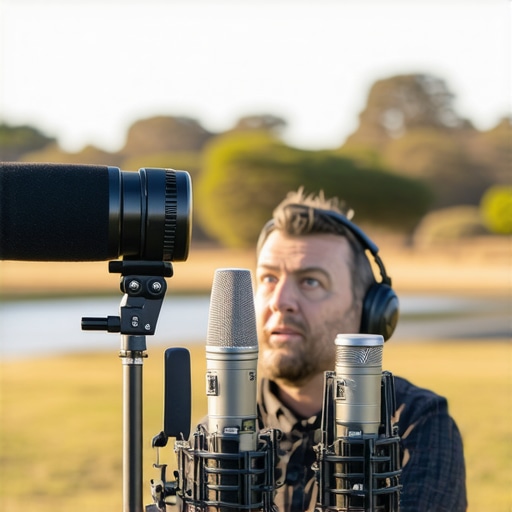
Ultimate Guide to Shotgun Microphones for Creators in 2025

I remember the exact moment I realized my audio wasn’t cutting it—after hours of meticulously editing my videos, only to listen to muffled voices and distant echoey sounds. It was frustrating, for sure, but it also lit a fire in me to find a better solution. That lightbulb moment made me dive deep into the world of shotgun microphones—those game-changing tools designed to capture crystal-clear audio even in less-than-ideal settings. If you’ve ever felt your voice gets lost amidst background noise or wondered whether you’re using the right mic, you’re not alone.
Why High-Quality Shotgun Microphones Can Transform Your Content
In 2025, content creation is more competitive than ever. With audiences expecting professional-quality sound, relying on your basic USB mic or a cheap XLR model can leave your sound marred by unwanted noise and poor clarity. I used to believe that just plugging in any microphone would do, but I uncovered the hard way that not all mics are created equal—especially shotgun microphones, which are engineered to focus on your voice and cut out the chaos around you. According to a study by the Audio Engineering Society, clarity and focus in voice recordings significantly impact viewer engagement, with nearly 70% of viewers citing poor audio as their biggest turn-off (AES, 2023). If you’re tired of losing viewers due to subpar sound, upgrading your gear might be the first step.
Have you faced the challenge of capturing clean audio in noisy environments? If so, I understand the frustration better than most. Early on, I made the mistake of relying solely on a basic USB microphone for outdoor shoots. It worked okay indoors but failed miserably when I stepped outside. It was a clear lesson that matching your microphone to your environment and content style is crucial—a mistake I certainly don’t want you to repeat.
Let’s explore how to choose the best shotgun microphones for your setup and make your voice stand out in 2025. Ready to cut through the noise and elevate your recordings?
Choose the Right Microphone for Your Environment
Picking the perfect shotgun mic starts with assessing your recording space. For outdoor shoots or noisy environments, focus on models with strong directional pickup patterns like supercardioid or hypercardioid. I once tried a omnidirectional mic during a windy outdoor session, and the sound was unusable—since then, I prioritize environment-specific mics. Be sure to check top shotgun microphones for creators in 2025 and select one tailored to your needs.
Master Proper Placement and Positioning
Position your shotgun mic as close to your mouth as possible without causing plosives. Use a boom pole or mic stand to keep it steady. Imagine your mic as a flashlight; point it directly at your face to illuminate your voice and block background noise. I learned this the hard way during a vlogging session, where moving the mic even a few inches made a huge difference in audio clarity. Remember, correct placement is pivotal—refer to guides on microphone setup for detailed positioning techniques.
Use Wind and Shock Mounts Effectively
To prevent wind noise and handling sounds, mount your microphone on a dedicated shock mount and attach a windscreen. Think of the shock mount as a shock absorber for your audio; it filters out vibrations and knocks. I once recorded outdoors during a rainstorm and forgot to add a windscreen—resulting in muffled audio. Since then, I’ve always paired my shotgun mics with appropriate mounts, which is supported by recommendations on best shot gun microphones for creators in 2025.
Configure Your Audio Chain Correctly
Connecting your mic properly is crucial. For XLR models, use quality audio interfaces with preamps that provide clean gain without distortion. USB mics are plug-and-play, but ensure you’re using the latest drivers to maximize clarity—check best USB microphones for creators in 2025 for recommended models. Remember, a good interface or interface-equivalent significantly amplifies your sound quality, turning raw signals into professional audio.
Test and Fine-Tune Your Setup
Before recording, always run a test. Speak at your usual volume and listen for background noise, plosives, or muffling. Adjust your mic angle and gain settings accordingly. During a recent outdoor shoot, I kept adjusting until I found the sweet spot—this iterative process yields the clearest sound. Use headphones to monitor in real-time, and consider tools like portable audio recorders for qualitative checks. To streamline your process, review tips in top XLR microphones for voice clarity and achieve consistency in your recordings.Many creators believe that choosing a specific type of microphone, such as an XLR mic or a USB mic, is straightforward, but the reality is more nuanced. A frequent trap is assuming that all microphones within a category perform equally well; in truth, the quality hinges on details like capsule design, preamp quality, and implementing proper setup techniques. For instance, a popular belief is that USB microphones can’t match XLR models in sound quality—yet, high-end USB mics like those listed on best USB microphones for creators in 2025 can deliver stunning clarity when used correctly. Conversely, many overlook that post-processing can overshadow hardware limitations, especially if you neglect proper gain staging during recording. A common myth is that shotgun microphones are only suitable for film or outdoor use; they actually excel in voice recording when positioned correctly, which is covered in top shotgun microphones for voice in 2025. One sneaky pitfall is underestimating the importance of environment-specific settings—what’s perfect indoors may be disastrous outdoors without windshields or proper placement. Advanced users often focus solely on equipment specs, but neglect that proper acoustic treatment and positioning outweigh hardware specs in vocal clarity. To truly elevate your recordings, consider mastering nuance details like proximity effect management and proper mic orientation; these can dramatically improve your output, as emphasized in expert interviews with top sound engineers. Want to avoid these pitfalls and unlock the full potential of your setup? Keep exploring with the right knowledge and adjustments. Have you ever fallen into this trap? Let me know in the comments.Once you’ve invested in a high-quality shotgun microphone or upgraded to a premium USB mic, the next step is ensuring your gear remains in top shape over time. Proper maintenance not only preserves sound quality but also extends the lifespan of your equipment. Regularly inspecting connections, cleaning windshields, and updating firmware can prevent common issues that degrade audio fidelity. I personally schedule bi-annual checks: I use compressed air to clear dust from ports, replace worn mounts, and verify cable integrity. This proactive approach minimizes unexpected failures during critical recording sessions. Additionally, investing in a dedicated storage case helps protect sensitive components from physical damage and environmental factors such as humidity or extreme temperatures. For software, keeping your recording drivers and firmware current ensures compatibility with your evolving setup and incorporates important performance improvements. I recommend subscribing to updates from your microphone manufacturer or checking their support pages periodically, as highlighted in the [ultimate guide to XLR microphones](https://mics.creatorrigreviews.com/ultimate-guide-to-xlr-microphones-podcast-mic-setup-2025), to stay informed about best maintenance practices. Prediction-wise, as recording technology advances, expect smart microphones equipped with self-maintenance diagnostics and remote troubleshooting capabilities, pushing us closer to automation and ease of upkeep. How do I maintain my microphone setup over time? Focus on establishing a consistent routine: schedule regular physical inspections, clean with appropriate materials, update firmware, and store gear properly. This discipline ensures your investment continues delivering professional-grade sound for years to come. Want to see a real-world example? Try calibrating your gain settings after every few sessions. Adjust gain carefully, monitor with good headphones, and note how small changes dramatically improve clarity, especially when outdoors with wind interference. If you’re serious about voice clarity and long-term reliability, incorporating these maintenance tips is essential to keep your recordings pristine and professional. Remember, equipment neglect is often a silent killer of quality—stay vigilant and proactive. Are you ready to implement a maintenance routine? Start today with a quick inspection and clean—your future recordings will thank you.
The Hidden Pitfalls of DIY Audio Setup
One of the most eye-opening lessons I learned was that equipment alone doesn’t guarantee great sound. I once believed that buying the fanciest shotgun microphone would instantly elevate my recordings, but I soon discovered that proper placement, environment, and technique are equally vital. Overlooking these details led to muffled voices and background noise creeping in, despite having top-tier gear.
The Power of Practical Experience Over Theoretical Knowledge
Experimentation taught me more than any manual could. I spent hours adjusting mic angles, distances, and accessories, learning how small tweaks made dramatic improvements. For instance, using a windscreen during outdoor shoots transformed noisy wind into near-silence, emphasizing the importance of including accessories like windshields and shock mounts in your setup. Trust me, hands-on experience is irreplaceable when mastering voice clarity.
Seeking Feedback Changes Everything
Sharing recordings with fellow creators or mentors opened my eyes to subtle issues I couldn’t hear myself. Constructive criticism guided me to refine my mic positioning and gain settings, ultimately resulting in a professional sound. Don’t be hesitant to seek honest feedback—it’s a shortcut to understanding what truly works and what doesn’t.
Leveraging Resources That Turn Knowledge Into Action
Over time, I found that investing in comprehensive guides and tutorials accelerates mastery. The detailed articles on ultimate guide to XLR microphones provided actionable tips that I applied immediately. Similarly, reviews of top shotgun microphones for creators in 2025 helped me choose gear suited for my specific needs. Trusting curated, expert-verified resources shortens the learning curve immensely.
Hello, Action Takers!
Remember, mastering voice clarity with shotgun microphones or any professional gear is an ongoing process. Your commitment to learning, testing, and refining will turn your recordings into compelling content that truly stands out. Don’t wait for perfect conditions—start experimenting today and watch your audio quality soar.
About Me

Chesung Subba
Author/Writer
Hello, I'm Chesung Subba, a passionate writer who loves sharing ideas, stories, and experiences to inspire, inform, and connect with readers through meaningful content.
Follow Me
Connect with me and be part of my social media community.
Leave a Reply