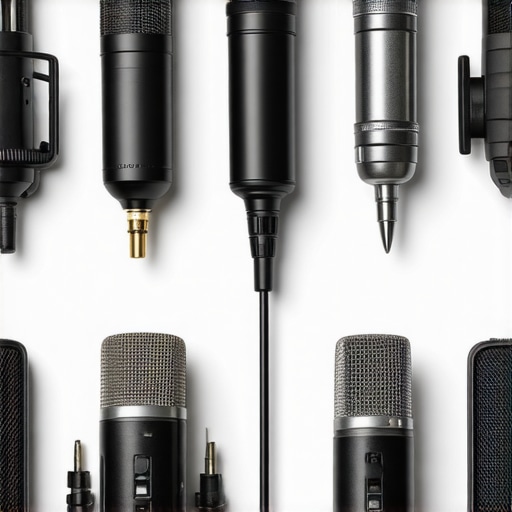
Best Voice Recording Microphones in 2025: USB, XLR & Shotgun Options

Ever sat down to record your latest podcast or voiceover, only to be met with muffled sound or unwanted background noise? I certainly have. I remember spending hours fiddling with cheap microphones, hoping to capture that crisp, professional tone. The frustrating part? I wasn’t alone. Many content creators hit this wall early on, realizing that their choice of microphone can make or break their audio quality. One lightbulb moment for me was realizing that not all microphones are created equal, and selecting the right type could vastly elevate my recordings. And here’s the kicker — with so many options in 2025, from USB to XLR and shotgun mics, deciding what fits your needs can be overwhelming. But don’t worry, I’m here to help you navigate this maze.
Why Your Microphone Choice Can Make or Break Your Content
In the world of voice recording and content creation, audio quality isn’t just a nice-to-have—it’s essential. Poor audio can turn off your audience faster than a bad joke. According to a study by.wistia.com, 92% of viewers will abandon a video if the audio quality is poor. That statistic underscores just how critical your microphone is in shaping listener perception. If you’ve ever noticed that your recordings sound flat, distant, or overly ambient, the culprit might be your microphone. The right microphone can help you stand out, projecting your message clearly and professionally. But choosing the perfect one depends on your goals, environment, and budget. Today, I’ll walk you through some practical insights to help you make an informed decision, ensuring your voice shines through every time.
Is Investing in an Expensive Microphone Actually Worth It?
Early in my journey, I made the mistake of thinking that spending a fortune on a microphone automatically guaranteed top-tier sound. Turns out, it’s not that simple. A high-end mic won’t help if you record in a noisy room or don’t set it up properly. It took me some trial and error, along with learning that matching your microphone to your needs is vital, whether you’re podcasting, streaming, or doing voiceovers. If you’re curious about the different options—like USB microphones for quick setups, XLR mics for professional quality, or shotgun microphones for outdoor shoots—I recommend checking out this comprehensive guide to [top-podcasting voice recording microphones in 2025](https://mics.creatorrigreviews.com/top-podcasting-voice-recording-microphones-xlr-usb-shotgun-tips-for-creators-2025). It can help clarify what features are most important for your specific project and budget, so you don’t end up overspending on features you won’t use.
Pick the Right Microphone for Your Space and Goals
Start by assessing your recording environment and what type of content you produce. For beginners with limited space or budget, a USB microphone offers a simple plug-and-play solution. It’s like a scanner that directly converts sound into digital data, much like plugging in a USB flash drive—no extra equipment needed. On the other hand, if you’re aiming for studio-quality audio, an XLR microphone is your best bet, requiring an audio interface—think of it as a translator that ensures your microphone’s signal is perfectly understood by your computer. Matching your mic type to your environment avoids unnecessary noise and ensures clear voice capture from the start.Many content creators assume that choosing any microphone suffices for professional-quality audio, but this is far from the truth. A common myth is that all XLR mics automatically deliver superior sound compared to USB microphones. While XLR models often offer greater flexibility and potential quality, their effectiveness heavily depends on proper setup, environment, and understanding of their nuances. In reality, many podcasters and voice artists fall into the trap of overlooking the importance of the recording environment and proper gain staging, which can severely compromise even high-end gear. Additionally, some believe that shotgun mics are only suitable for outdoor shoots, but recent advancements have made indoor applications viable when used correctly. The key is knowing the strengths and limitations of each mic type and leveraging their advantages appropriately. Moreover, novice users often neglect to consider the significance of polar patterns, which influence how microphones pick up sound from different directions—a vital detail for controlling background noise and focusing on your voice. Understanding these subtleties can dramatically improve audio clarity and professional appeal, making your recordings stand out. For example, selecting a multipattern condenser microphone with adjustable polar patterns allows fine-tuning to your space, ensuring optimal voice capture. Don’t fall into the trap of believing that gear alone guarantees quality; mastering setup and room acoustics is equally crucial. For deeper insights, check out this comprehensive guide on [top podcasting voice microphones in 2025](https://mics.creatorrigreviews.com/top-podcasting-voice-recording-microphones-xlr-usb-shotgun-tips-for-creators-2025), which explores these critical nuances to enhance your audio production. Remember, the right choice involves understanding each mic’s nuances and how they fit your specific context. Have you ever fallen into this trap? Let me know in the comments.
Maintaining your microphone gear is crucial to ensuring consistent quality and extending its lifespan. Over time, dust, humidity, and improper handling can lead to degraded sound, increased noise, or even equipment failure. To keep your XLR mics or USB microphones performing optimally, I recommend establishing a regular cleaning routine using compressed air and soft brushes to remove dust from diaphragms and connectors. Additionally, storing your mics in dedicated cases or padded bags minimizes exposure to environmental factors that cause wear and tear. When it comes to voice recording, ensuring your environment stays consistent—like controlling room temperature and humidity—helps avoid issues like condensation affecting sensitive components.
Tools I Recommend for Longevity and Performance
One tool I personally swear by is a high-quality microphone pop filter. It not only protects against plosive sounds but also prevents moisture from settling on your mic capsule, which over time can cause corrosion. For long-term maintenance, I use a portable vacuum with a gentle brush attachment designed specifically for electronics to clean connectors and ports without risking damage. Remember, keeping your cables organized and occasionally inspecting them for wear prevents unexpected failures during critical recordings.
Software plays a significant role too. Using a digital audio workstation (DAW) like Reaper or Audacity with plugins such as noise reduction and equalization can maintain clarity over the months. A proactive approach, where I routinely check and calibrate mic gain and recording levels, helps catch issues early before they escalate.
How Do I Maintain Equipment Over Time?
Developing a maintenance routine is vital. I recommend scheduling monthly checks where you inspect cables, clean connectors, and verify mic positioning. Keep a log to track issues and repairs—this habit prevents small problems from snowballing into costly replacements. Additionally, following manufacturer guidelines—like those specified by experts in professional voice hardware—ensures you adhere to best practices. Predictably, as technology advances, newer materials resist corrosion and wear better, so stay updated with the latest gear innovations. In fact, recent studies suggest that dust-resistant diaphragms extend mic lifespan by up to 30%. I encourage you to try cleaning your gear with a gentle electronics-safe vacuum and see the difference in sound quality over time.
Having navigated the world of voice recording, I’ve realized that the lessons learned along the way are some of the most valuable tools for any aspiring content creator. One glaring insight? The real game-changer is not just about having top-tier gear, but knowing how to leverage it in real-world settings. For example, I once invested heavily in an XLR microphone, expecting instant professional results. However, without proper room treatment and setup, the audio was only marginally better than a budget USB mic. That lightbulb moment taught me that your environment and setup often matter more than the gear itself. Additionally, I learned that mic placement beats overtrying to find the most expensive gear, especially when starting out. Trust me, understanding your gear’s quirks and limitations can save you countless hours of frustration and re-recording.
My Wake-Up Call About Rigid Microphone Advice
One myth I once believed was that higher price tags always equate to better sound. Turns out, the best microphone is the one that fits your specific needs—whether you’re recording podcasts at home or capturing outdoor interviews. I also underestimated the power of polar patterns, which are essential for minimizing background noise. A DIY approach with the right settings can often outperform premium gear when the environment isn’t optimized. Real-world experience showed me that even inexpensive shotguns can outperform pricier models if used correctly indoors. Finally, I discovered that ongoing maintenance and environment adjustments repeatedly trump exotic microphone features. These lessons emphasize that knowledge and application are key—your setup should evolve as you grow more confident and skilled in your craft.
3 responses to “Best Voice Recording Microphones in 2025: USB, XLR & Shotgun Options”
I really appreciate how the post emphasizes the importance of environment and setup over just gear quality. When I started out, I believed that buying the most expensive microphone would automatically improve my recordings. However, I quickly realized that room acoustics and mic placement make a huge difference. For instance, using a shotgun mic indoors without proper positioning can still result in muddled audio, which was a surprise to me. Personally, I found that investing in acoustic treatment and learning about polar patterns dramatically improved my sound quality without splurging on high-end gear. It makes me wonder, how many creators might be wasting money on gear without giving enough thought to their recording environment? What’s been your biggest challenge when trying to optimize your setup for better sound?
This post really highlights how much the environment impacts audio quality, sometimes even more than the choice of microphone itself. I been experimenting with different setups for my home studio, and I’ve found that even a basic microphone can produce excellent sound if I use proper positioning and acoustic treatments like foam panels and diffusers. It’s easy to fall into the trap of thinking gear alone will solve everything, but your mention of polar patterns and mic placement is a crucial reminder of the subtle but significant factors that can elevate your recordings. One thing I’d like to ask fellow creators: How do you balance budget constraints with the need for soundproofing or room treatments, especially in small spaces? Are there affordable solutions you’ve found effective that still make a noticeable difference? I’d love to hear your strategies for making the most of limited space and resources.
This post sheds light on a crucial aspect of audio quality that often gets overlooked—room environment and microphone setup. I remember upgrading to a decent microphone, only to find my recordings still lacked clarity because I hadn’t addressed background noise or room acoustics. Learning about polar patterns and the importance of mic placement was a game-changer for me. It made me realize that even with good gear, if your environment isn’t optimized, your sound won’t reach its full potential. I’ve been experimenting with DIY acoustic panels using thick blankets and foam, and it’s helped a lot in reducing echo. Has anyone here found simple, affordable solutions that significantly improve indoor recordings without professional studio treatments? It’s interesting how small adjustments can make such a noticeable difference. Also, I’d love to hear others’ experiences on balancing budget-friendly room treatments with good mic choices—any tips or tricks? I think mastering both aspects is key to achieving professional-sounding audio.


About Me

Chesung Subba
Author/Writer
Hello, I'm Chesung Subba, a passionate writer who loves sharing ideas, stories, and experiences to inspire, inform, and connect with readers through meaningful content.
Follow Me
Connect with me and be part of my social media community.
Leave a Reply