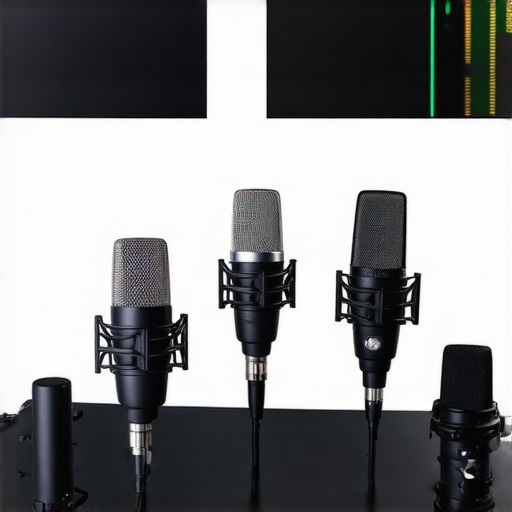
Best Voice Recording Microphones in 2025: Top USB, XLR & Shotgun Choices

I still remember the moment I recorded what I thought was a decent podcast episode—only to realize my voice sounded muffled, distant, and frankly, just not professional enough. It was a lightbulb moment that made me question: had I been wasting hours on the wrong microphone all along? If you’ve ever found yourself in a similar situation, frustrated with unclear audio despite investing in what you thought was top gear, you’re not alone. Many creators dive into voice recording with high hopes but end up battling echo, background noise, or muddy sound quality. The good news? After extensive trial and error, I discovered that choosing the right microphone can make all the difference—especially in 2025, with so many options available. Today, I promise to share my insights on selecting the best voice recording microphones across USB, XLR, and shotgun choices, based on personal experience and the latest expert recommendations. Whether you’re podcasting, streaming, or creating professional voiceovers, this guide will help you cut through the confusion and find the gear that truly elevates your sound.
Why the Perfect Microphone Matters More Than Ever in 2025
As voice-based content continues to dominate digital platforms, audio quality isn’t just a bonus—it’s a necessity. According to a recent report by Edison Research, podcasts with crystal-clear sound see 30% higher listener retention. That means if your audio isn’t on point, you’re losing potential fans and clients right from the start. But with so many microphone types available—USB, XLR, shotgun—it can feel overwhelming. I learned early on that a common mistake many creators make is selecting a microphone based solely on hype or price, without considering their specific needs or acoustic environment. I once bought a high-end shotgun mic because everyone raved about it, only to realize it picked up every background noise in my cluttered home studio. My mistake was ignoring my room’s acoustics and the actual use-case. If you’re curious about the latest, most effective options for 2025, I highly recommend checking out the comprehensive [ultimate guide to voice recording microphones](https://mics.creatorrigreviews.com/ultimate-guide-to-voice-recording-microphones-usb-xlr-shotgun-picks-2025). Do you often find yourself battling echo, background noise, or inconsistent sound quality in your recordings? If so, stay tuned. We’re about to dive into practical tips and real-world recommendations that can transform your audio game with the right microphone choices.
Select the Microphone Type That Matches Your Environment
Start by evaluating your recording space. If you have a quiet, treated room, an XLR microphone can deliver studio-level sound. Think of it like choosing a high-end DSLR camera for professional photography—it’s worth the investment but requires some expertise. For desk setups or streaming, a USB microphone is more straightforward, akin to using a point-and-shoot camera—simple, effective, and connects directly to your computer. Shotgun microphones, detailed here, are ideal for capturing focused audio from a distance, such as when recording outdoors or in noisy environments.
Match the Microphone to Your Voice and Use-Case
Consider your voice profile and recording style. For deep, resonant voices, a large-diaphragm XLR mic can add richness and warmth—think of it as using a microphone preamp that adds character. If you’re recording quick voiceovers or podcasts at your desk, a USB podcast mic offers convenience without sacrificing quality. For multi-directional needs, such as podcasting with guests, consider a multi-pattern USB mic or an XLR setup with multiple capsules. It’s like choosing between a wide-angle lens for capturing entire scenes or a zoom for focused shots—each serves a purpose.
Evaluate Your Acoustic Space and Gear Compatibility
Room acoustics play a crucial role. A shotgun mic can suppress ambient noise effectively, but only if your environment doesn’t have excessive echo or background sounds. Use this as a guide: if your room is untreated, prioritize microphones with built-in noise rejection or consider acoustic treatment to complement your gear. Additionally, ensure your microphone interface or converter matches your mic’s output. If you opt for XLR, you’ll need an audio interface—think of it as the power supply and translator for your sampler. For USB mics, plug-and-play simplifies setup but verify your computer’s compatibility and driver support for seamless operation.
Experiment and Fine-Tune for Best Results
Once set up, test different positioning techniques. Record voice from various distances—like adjusting a camera lens—to find the sweet spot. For instance, I once placed my USB mic too close, causing muffling, then shifted it slightly for clarity. Use pop filters or foam shields to minimize plosive sounds—imagine filtering out harsh distortions like a sound engineer shaping audio frequencies. Adjust gain levels meticulously: too high amplifies background noise, too low results in weak audio. Remember, your microphone’s placement is key—at mouth level, about 2-4 inches away, directs focus and reduces noise. For consistent quality, consider using a shock mount and windscreen, likening them to stabilizers on a camera for steady shots.
Leverage Resources to Make Informed Choices
Stay updated with expert insights and reviews. Dive into comprehensive guides like this resource to compare specs and user feedback. Watching real-world test videos can reveal how microphones perform in scenarios similar to yours. Remember, the goal is to align your gear with your content creation needs, ambient environment, and voice characteristics. This balanced approach ensures your audio is professional, clear, and engaging, whether you’re behind a mic for a podcast, voiceover, or streaming session.Many people assume that investing in a high-quality microphone guarantees perfect sound, but in my experience, this is only half the story. A prevalent misconception is that all microphones of the same type deliver identical results, which isn’t true. For example, many believe that an XLR microphone is inherently superior to a USB mic, yet without proper interface setup and room acoustics, even the best XLR can underperform. The real nuance lies in understanding how pairing your microphone with appropriate gear, acoustic treatment, and technique makes or breaks your recordings. Moreover, a common trap is focusing solely on microphone quality while ignoring positioning, gain settings, and environment, which are equally critical for achieving professional audio. An advanced creator knows that mastering these details unlocks the full potential of their equipment. Interestingly, some resources highlight that many top podcasters and streamers get significant improvements by refining mic placement and audio processing instead of chasing the latest gear—how you use your mic often trumps the mic’s specs (source: this comprehensive guide). So, next time you consider upgrading your gear, ask yourself: am I optimizing setup and environment first? Have you ever fallen into this trap? Let me know in the comments.
Another hidden nuance involves the myth that shotgun microphones are best only for outdoor or noisy environments. While they excel in isolating sound from a distance, many creators overlook that shotgun mics can also be valuable for indoor recording when used correctly—placed appropriately and with proper acoustic treatment. Incorrect placement, however, can result in phase issues or capturing unwanted ambiance. An example is using a shotgun mic in a cluttered room without understanding its pickup pattern, which can lead to echo and background noise, defeating its purpose. To maximize their potential, pairing shotgun mics with acoustic panels and learning proper positioning—like shotgun mic placement five to ten feet away—can make a significant difference. For those wanting to explore this further, check out the detailed reviews on shotgun microphones for 2025. Often, the secret to great voice recordings isn’t just gear but how you utilize it, including understanding the subtleties of each microphone type. Remember, mastering these nuances elevates your audio quality well beyond the basics.
The Secret to Durable Voice Recording Equipment
Keeping your microphone setup in top shape is essential for consistent, professional sound quality. I personally rely on routine maintenance, like regular cleaning of microphone capsules with soft brushes and ensuring connectors are free of dust and corrosion. For USB microphones, I recommend using a dust cover or storage case to prevent debris buildup. When it comes to XLR mics, periodically inspecting the cables for wear and replacing them if you notice any crackling sound or physical damage can save you from unexpected audio hiccups. Investing in a dedicated microphone stand with shock absorption can also preserve your equipment’s lifespan—I’ve seen too many creators suffer from unwanted handling noise due to poorly stabilized setups.
Tools That Make Maintenance Easier
In my toolkit, I keep a small set of isopropyl alcohol wipes specifically for connector pins, preventing oxidation. A gentle microfiber cloth is perfect for cleaning the body of the microphone without scratching. For detailed cleaning, I use a soft-bristled brush to remove dust from around the capsule, which is particularly critical for shotgun mic maintenance. To protect my investment, I always store my mics in padded cases when not in use. For software, I make sure to keep my audio drivers and recording applications updated, as outdated drivers can cause glitches or reduced performance. For instance, the latest updates for popular audio interfaces like Focusrite or Universal Audio gear often include stability improvements, as documented in their release notes.
How do I maintain my microphone setup over time?
Regular checks are vital. After every few sessions, I examine cables for any physical damage and swap them out if needed. It’s also beneficial to periodically recalibrate your gain settings and verify your microphone’s positioning. For USB microphones, cleaning the USB port gently with compressed air helps avoid connection issues. Additionally, consider acoustic treatment for your recording environment—this not only improves sound quality but also reduces strain on your gear by minimizing unwanted noise. According to audio engineer Dave Royer, consistent routine maintenance coupled with proper storage extends equipment life significantly and ensures your recordings stay pristine. To simplify this process, I highly encourage trying out a dedicated microphone cleaning kit—small, affordable, and surprisingly effective at prolonging equipment health. Remember, maintaining your gear means not just fixing problems when they arise but proactively preventing them. So, take a few minutes today to inspect and clean your setup—the payoff in sound clarity and durability is well worth it.
The Hardest Lesson I Learned About Choosing the Right Voice Recording Microphone
One of my most significant realizations was that gear alone doesn’t guarantee quality. I once invested in a top-rated shotgun mic, expecting studio-quality sound, but neglected my room’s acoustics. The result was echo and background noise that even the best microphone couldn’t mask. It taught me that understanding your environment and how you use your gear is just as crucial as the equipment itself.
Another heavy lesson came from obsessing over specs rather than practicality. I focused solely on frequency response charts, but what truly matters is how the microphone performs in my specific space and with my voice. Sometimes, a simpler USB mic with proper placement outperforms high-end gear in the wrong conditions.
Finally, I learned that routine maintenance and setup adjustments can elevate your audio quality more than frequent upgrades. Regular cleaning, careful placement, and sound treatment can make even an entry-level mic sound pro. These lessons shaped my approach, emphasizing that mastery of setup and environment is the real secret to professional voice recordings.
My Essential Tools for Better Voice Recording
For staying sharp, I rely heavily on resources like the ultimate guide to voice recording microphones, a cornerstone for making informed choices. I trust it because it combines expert analysis with real-world user feedback, helping me match gear to my specific needs.
When I want to compare microphone options, I turn to comprehensive reviews of USB mics for 2025, which break down usability, sound quality, and adaptability. For XLR setups, the best XLR microphones for podcasts offer a curated list of trusted models tailored to different environments. These tools keep my workflow efficient and stress-free.
And for specific scenarios like outdoor shoots or recordings in noisy spaces, shotgun microphones in 2025 have become invaluable—expanding my creative possibilities while maintaining clarity regardless of surroundings.
Your Chance to Sound Like a Pro
Remember, great voice recording in 2025 isn’t about having the shiniest gear but mastering your setup and environment. With consistent care, proper placement, and informed choices, you can unlock a professional sound that elevates your content and connects with your audience. It’s an exciting time to be a creator—your perfect mic isn’t just a purchase; it’s an investment in your voice’s future.
What’s been your biggest challenge in choosing or setting up a microphone? Share your experience below—I’d love to hear how you’re making your audio stand out!
About Me

Chesung Subba
Author/Writer
Hello, I'm Chesung Subba, a passionate writer who loves sharing ideas, stories, and experiences to inspire, inform, and connect with readers through meaningful content.
Follow Me
Connect with me and be part of my social media community.
Leave a Reply